

Best Bridal Mehendi Designs for Full Hands: The Ultimate Guide

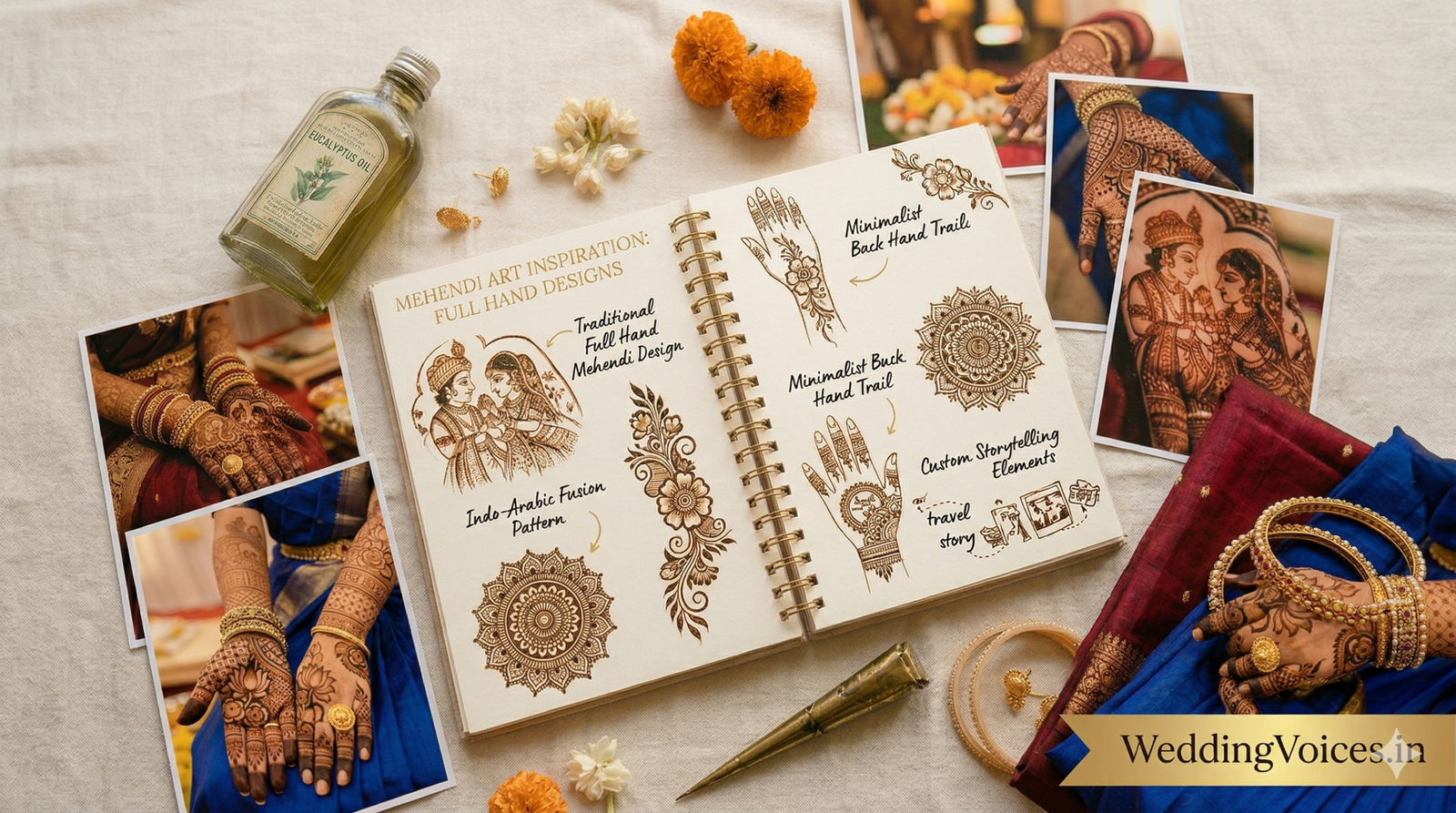
The fragrance of fresh eucalyptus oil, the rhythmic beats of the dholak, and the laughter of your closest family and friends—the Mehendi ceremony is often the most vibrant and emotionally resonant pre-wedding event. At the very center of this beautiful chaos is the Bridal Mehendi. For generations, Indian brides have adorned their arms and legs with the rich, cooling paste of the henna plant. While modern minimalism has its charm, there is an undeniable, timeless majesty to full hand mehendi.
Stretching gracefully from the tips of the fingers all the way to the elbows, full hand bridal mehendi makes a royal, unforgettable statement. It transforms the bride’s skin into a breathtaking canvas of storytelling, culture, and art. If you are a bride-to-be looking for the ultimate mehendi art inspiration, this comprehensive guide will take you through the latest trends, deeply rooted traditions, and provide you with actionable tips to ensure your henna stains a dark, beautiful mahogany.
The Cultural Significance of Bridal Hand Decoration
Before exploring specific mehendi design ideas, it is vital to understand the profound meaning behind this ancient practice. Bridal hand decoration is much more than a cosmetic enhancement; it is a sacred ritual deeply embedded in Indian heritage.
Historically, applying henna was a practical way to cool the body. Weddings bring immense joy, but they also bring stress. The cooling properties of the henna plant, when applied to the nerve endings on the hands and feet, helped calm the bride’s nerves before her big day. Over the centuries, this practical application evolved into the intricate mehendi art we see today.
Culturally, the darkness of the henna stain is famously associated with the depth of the groom’s love, or the affection of the mother-in-law. Furthermore, traditional bridal mehendi is heavily symbolic. Hidden within the mesmerizing swirls, lotuses, and geometric grids are blessings for fertility, prosperity, and joy. The ceremony itself marks the bride’s official transition into her new life, making her bridal henna patterns a physical manifestation of good fortune and protection against the evil eye.
Top Wedding Mehendi Styles for Your Big Day
The world of henna designs for brides is vast, dynamic, and endlessly creative. By drawing inspiration from top bridal platforms and world-renowned henna artists, we have categorized the most sought-after wedding mehendi styles to help you narrow down your vision.
1. Traditional Indian Bridal Mehendi
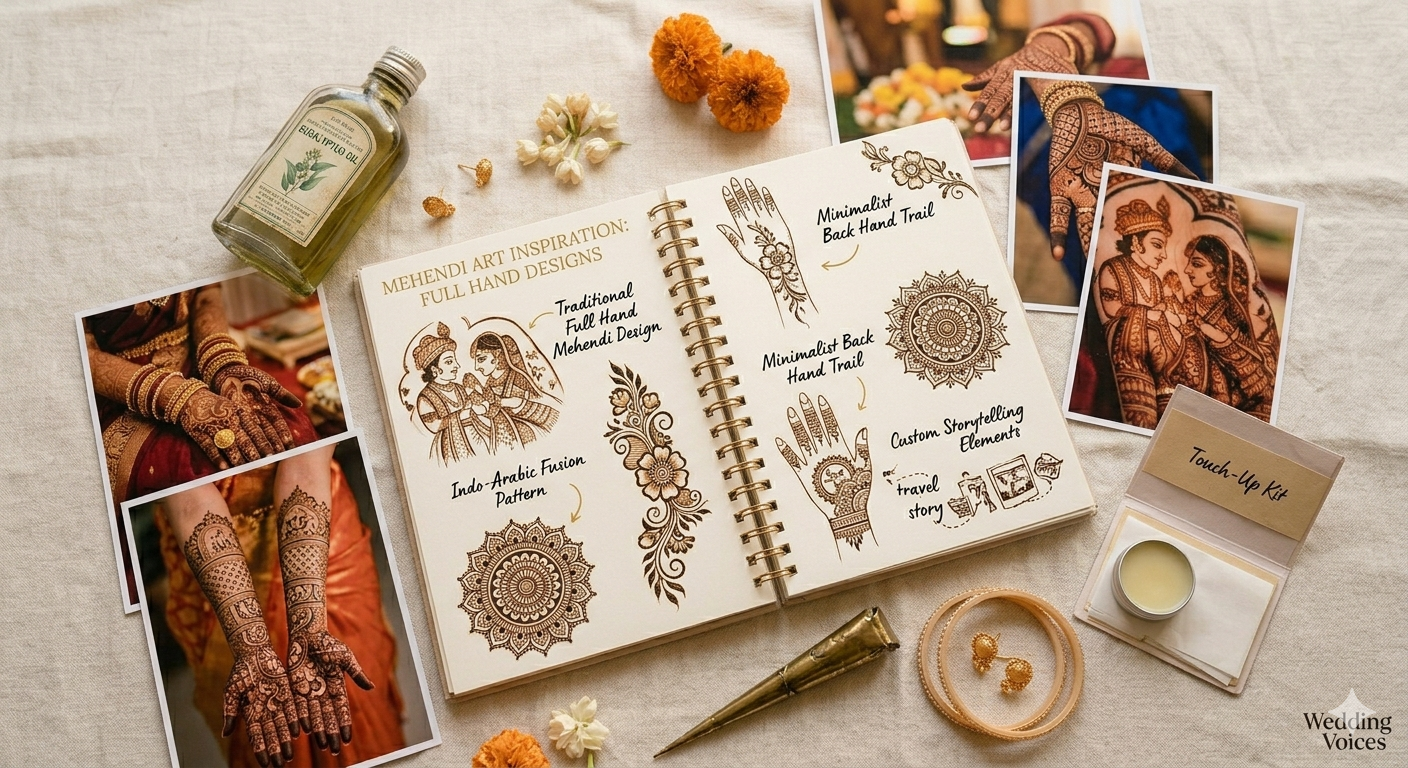
When you envision a classic, opulent bridal look, you are picturing Indian bridal mehendi. This style is defined by its breathtaking density. The artist uses incredibly fine, delicate lines, ensuring there is almost no negative space (bare skin) visible.
-
The Raja-Rani Motif: The centerpiece of this style is often the highly detailed portraits of a King and Queen, drawn intricately on the center of the palms.
-
The Jharokha Style: Inspired by the ancient palatial windows of Rajasthan, artists create arched window frames on the forearms, filling them with scenes of the Doli (bridal carriage), the Baraat (the groom’s procession), or temple bells.
-
Best For: Brides wearing heavily embroidered, traditional silk Kanjeevarams or classic red velvet lehengas. It exudes royalty, heritage, and pure tradition.
2. Personalized and Storytelling Mehendi
The most significant trend in Mehendi designs today is extreme personalization. Brides are moving away from generic motifs and turning their arms into literal storybooks.
-
Love Stories: Mixed into the intricate mehendi art, artists are hiding specific elements unique to the couple. This could be the skyline of the city where they first met, the coordinates of the proposal, or even logos of their favorite sports teams or TV shows.
-
Pet Portraits: For brides who cannot bring their furry friends to the mandap, incorporating tiny, realistic portraits of their dogs or cats into their full hand mehendi has become incredibly popular.
-
Best For: The contemporary, romantic bride who wants her wedding look to be deeply personal and 100% unique to her journey.
3. Exquisite Floral Mehendi Designs
Flowers represent joy, new beginnings, and delicate beauty—making floral mehendi designs an evergreen favorite. This style can be adapted to be either tightly packed or comfortably spaced out.
-
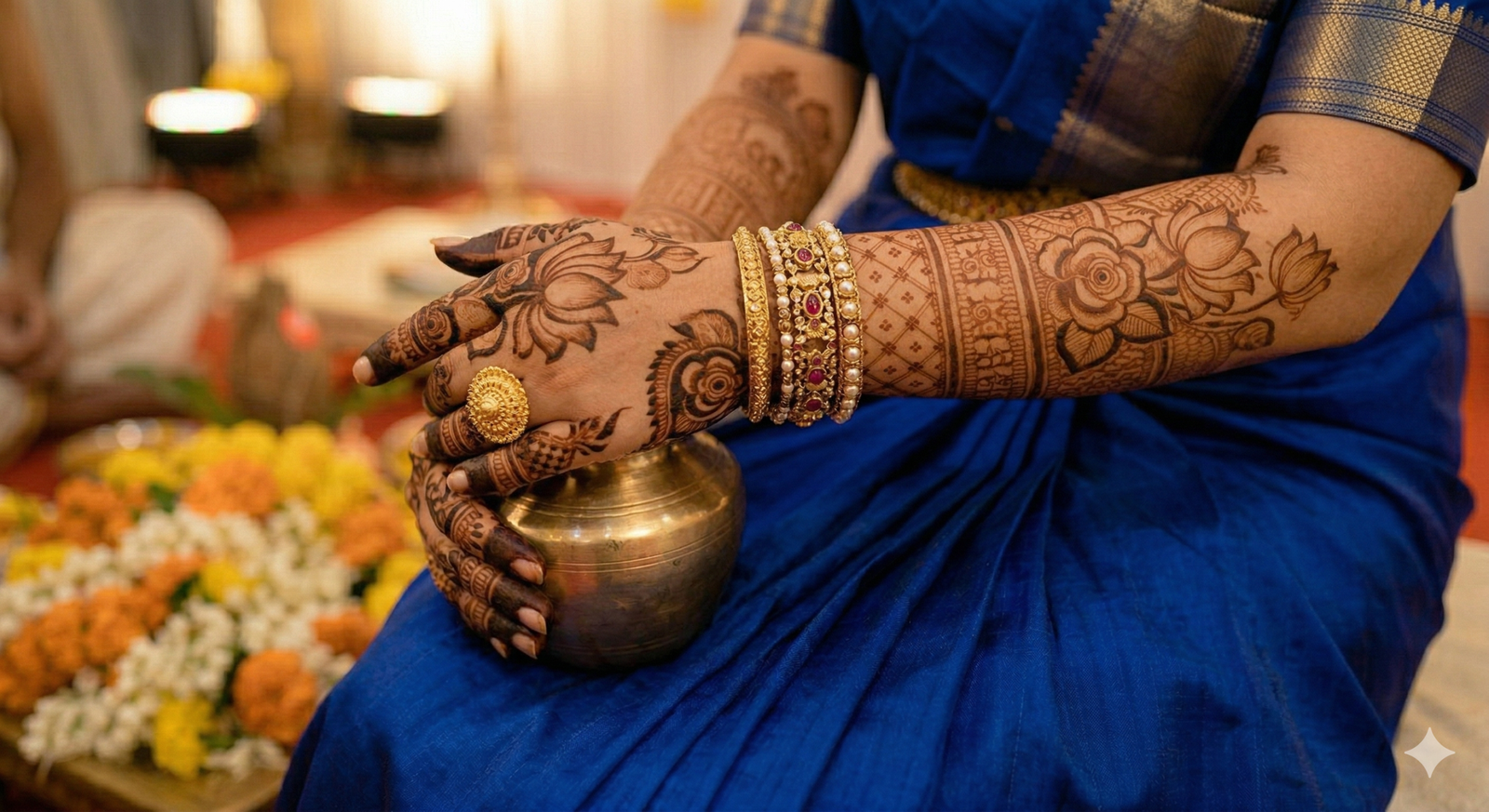
The Lotus Motif: The lotus is a powerful symbol of purity and auspiciousness in Hindu culture. Artists often draw large, meticulously shaded lotuses inside geometric mandalas or diamond grids (Jaali).
-
Rose Trails: Cascading trails of shaded roses that wrap around the wrists and forearms offer a highly romantic, soft aesthetic.
-
Best For: Spring and summer weddings, outdoor daytime ceremonies, and brides opting for pastel-colored lehengas or floral jewelry.
4. Elegant Arabic Mehendi Designs
If you love the coverage of full hand mehendi but prefer a slightly more modern, striking look, Arabic mehendi designs are the perfect choice.
-
Bold Strokes and Negative Space: Unlike the dense Indian style, Arabic henna utilizes strategic empty space. The bold, thick outlines and internal shading make the dark henna lines truly pop against the skin.
-
Diagonal Flow: The patterns typically flow diagonally, starting from the index finger and sweeping elegantly down across the back of the hand toward the forearm, featuring large leafy vines and bold floral clusters.
-
Best For: Brides looking for an elegant bridal mehendi look that photographs beautifully with high contrast, and requires slightly less application time than traditional portraits.
5. Symmetrical Mandala Art
For the perfectionist bride, the mandala style offers immense visual satisfaction. A mandala is a spiritual and ritual symbol representing the universe.
-
Perfect Halves: The artist draws a half-mandala on each hand. When the bride brings her hands together, the two halves form a perfect, breathtakingly symmetrical circle. The fingers and forearms are then adorned with complementing geometric shapes, straight lines, and sharp angles.
-
Best For: Brides who love symmetry, clean lines, and a beautiful fusion of traditional spirituality with modern geometric aesthetics.
Visualizing the Art: Henna Patterns with Pictures
When consulting with your henna artist, visual references are crucial. Showing your artist exactly what you want ensures you are both on the same page regarding the density and flow of the design.
Traditional Raja Rani Motif (Density & Storytelling)
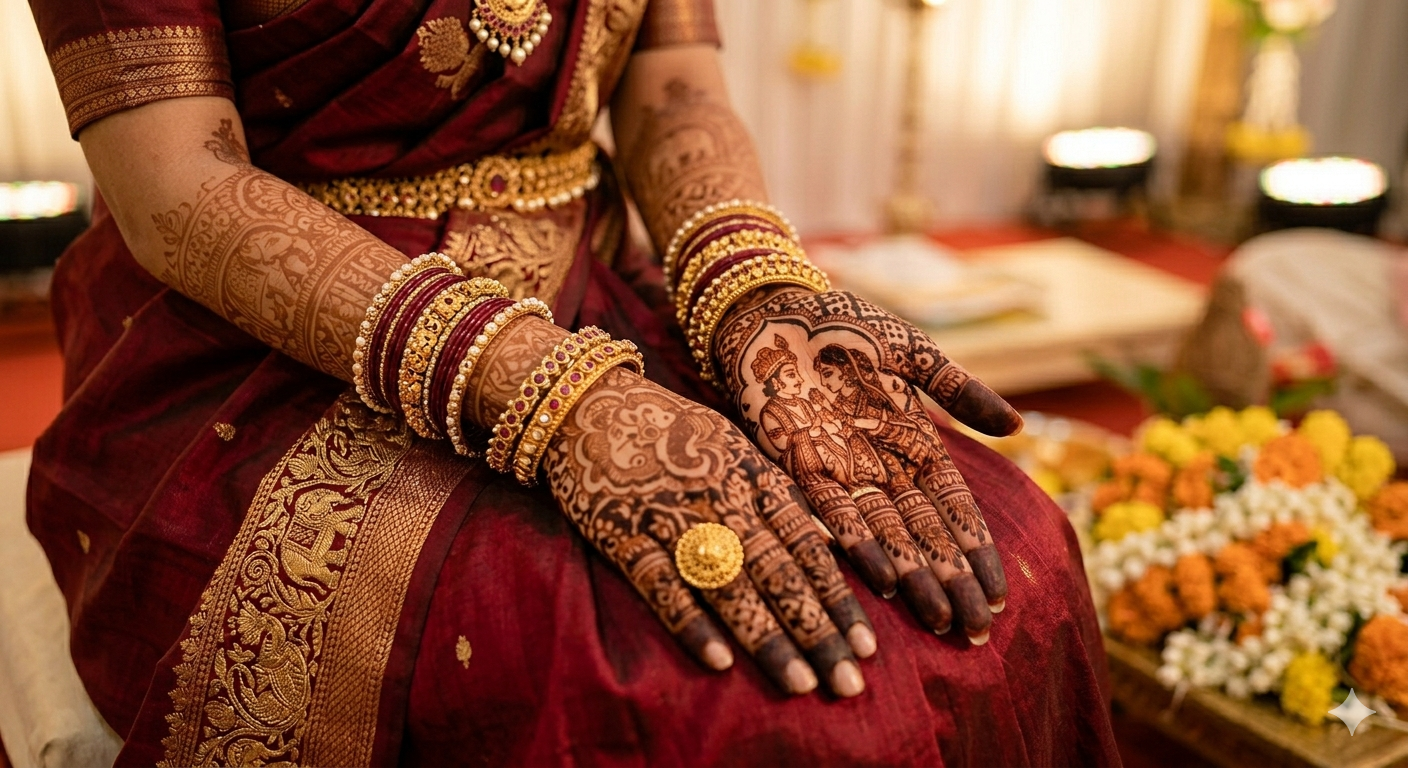
This close-up photograph encapsulates the essence of traditional bridal mehendi. It depicts a bride’s hands covered in dense, intricate mehendi art that extends to the elbows, featuring the iconic Raja and Rani motifs on the palms. The rich, deep mahogany brown stain contrasts beautifully with the crimson silk saree, illustrating a classic Indian bridal look. This design is perfect for brides wearing heavily embroidered attire for their main ceremony.
Indo-Arabic Fusion Pattern (Flow & Spacing)
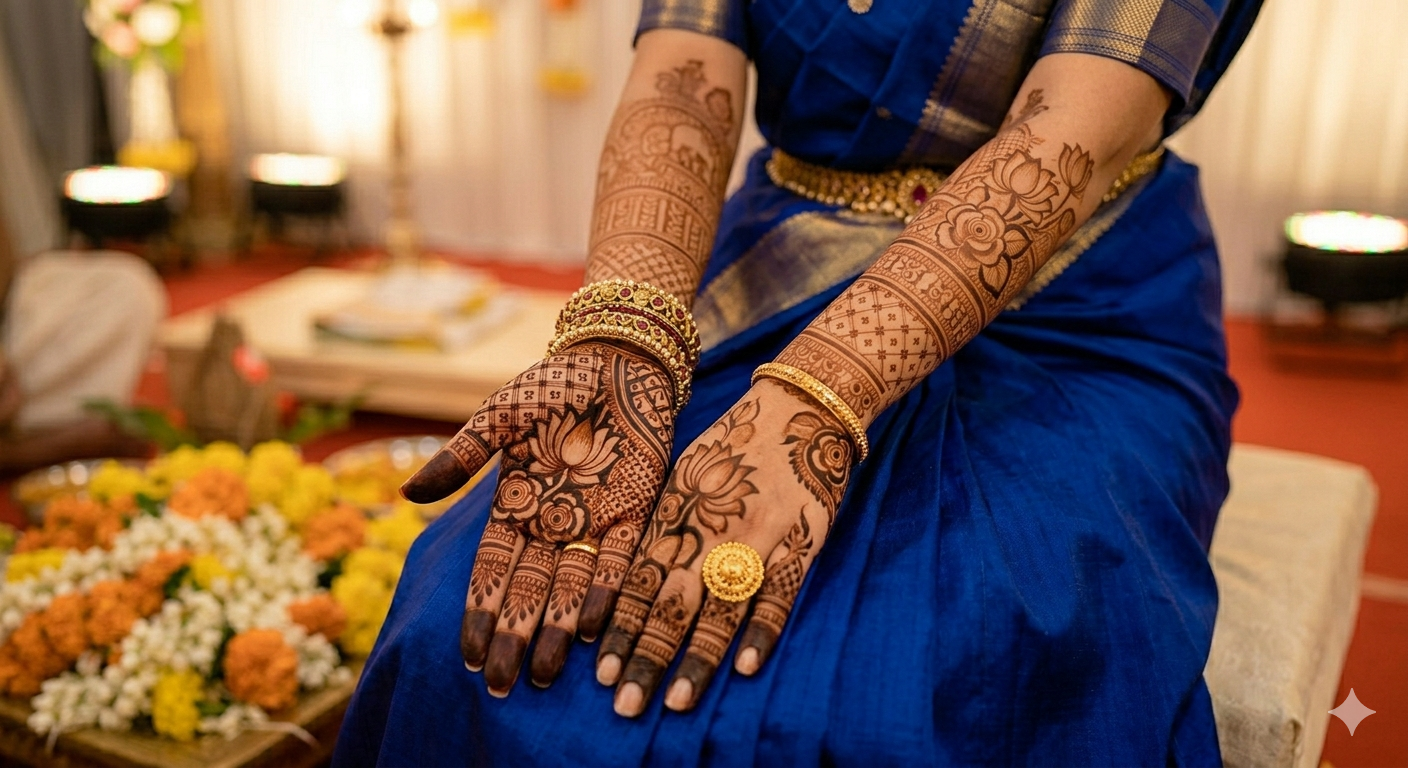
In contrast to the dense traditional design, this atmospheric photograph captures the hands of a bride with an elegant bridal mehendi look. This is an Indo-Arabic fusion pattern, combining bold, shaded floral vines and lotus flowers with delicate jaali (grid) patterns. This visual brilliantly uses negative space (the strategic empty space between the henna lines), demonstrating how the rich stain pops against the skin. It pairs well with royal blue or pastel attire, as seen in the bride’s minimalist silk saree, and is perfect for daytime ceremonies.
Symmetrical Mandala Art (Structured Beauty)
Here is a close-up that perfectly illustrates the concept of symmetrical bridal henna patterns. This organized and inspirational flat lay composition features a high-resolution close-up of a bride’s hands covered in structured mandala and floral Jaali mehendi. A central, complex circular pattern (mandala) is formed when the bride’s palms come together. This symmetrical circular design, heavily featuring shaded lotuses and clean geometric grids, creates a satisfying, harmonious effect. The bride’s hands rest on a silk saree, similar to the setting in image_19.png. This image demonstrates structured beauty for the meticulous bride.
Mehendi for Wedding Ceremonies: Prep and Aftercare
You can hire the most talented artist to draw the most elegant bridal mehendi, but the art is only half the battle. The chemical reaction between the natural henna paste and your skin requires specific care to achieve that deep, coveted mahogany stain. Follow these pro-tips for flawless results.
Pre-Application Preparation
Exfoliate: Scrub your arms and legs gently a day before the Mehendi ceremony to remove dead skin cells. Henna stains best on fresh, smooth skin.
Avoid Lotions: Do not apply heavy body lotions, butters, or oils on the day of the application. These products create a barrier that prevents the henna dye from fully absorbing into the skin.
Dress Comfortably: You will be sitting still for 4 to 8 hours. Wear something comfortable with short sleeves, and ensure you use the restroom and eat a good meal before the artist begins!
Post-Application Aftercare
Leave it On: Patience is the ultimate secret. For full hand bridal mehendi, you should leave the paste on for a minimum of 6 to 8 hours. Many brides choose to sleep with the paste on overnight, wrapping their hands loosely in medical paper tape to protect the design and trap body heat.
The Lemon-Sugar Sealant: Once the henna starts to dry and crack, gently dab a sticky mixture of lemon juice and sugar over the design using a cotton ball. The sugar holds the paste to the skin, while the acidic lemon helps release more dye.
The Clove Smoke (Bhapa): Roast a few cloves on a pan and carefully hold your hands above the fumes. The heat and the essential oils from the cloves dramatically darken the stain.
Avoid Water at All Costs: After you gently scrape off the dried paste (never wash it off with soap and water!), avoid getting your hands wet for at least another 12 to 24 hours. Apply a thin layer of eucalyptus oil, Vicks VapoRub, or a natural henna balm to protect the stain while it oxidizes.
Frequently Asked Questions (FAQs)
Q: How long does it take to apply full hand bridal mehendi?
A: Applying highly detailed, intricate mehendi art from the fingertips to the elbows on both hands can take anywhere from 4 to 8 hours. This heavily depends on the speed of the artist and the complexity of the motifs you choose.
Q: How many days before the wedding should I get my mehendi done?
A: 100% natural, organic henna takes about 48 hours to fully oxidize and reach its darkest, peak color. Therefore, it is best to schedule your Mehendi ceremony exactly two to three days before your main wedding event.
Q: Can I mix Arabic and Traditional Indian styles?
A: Absolutely! “Indo-Arabic” fusion is currently one of the most requested wedding mehendi styles. It combines traditional Indian motifs (like peacocks and mandalas) with the bold outlines and elegant negative space of Arabic designs.
Q: Is “black henna” or “instant henna” safe for brides?
A: No. You should strictly avoid “black henna” or instant cones. These are often filled with dangerous chemical dyes like PPD (paraphenylenediamine), which can cause severe chemical burns, permanent scarring, and allergic reactions. Always insist your artist uses 100% natural, freshly mixed organic henna paste.
Q: How do I preserve my mehendi design after the wedding is over?
A: To make your bridal hand decoration last longer during your honeymoon, keep your skin highly moisturized using natural oils (like olive or coconut oil). Avoid harsh chemical soaps, heavily chlorinated swimming pools, and excessive scrubbing in the shower.
*** Planning an Indian wedding involves coordinating countless details, managing vendors, and finalizing guest lists. However, your Bridal Mehendi application is one of the few precious moments where you are forced to sit still, reflect on the journey, and simply be pampered. Whether you choose a dense, traditional masterpiece that takes eight hours to apply or a sleek, personalized storyboard of your romance, let your hands tell your beautiful story. Gather your mehendi art inspiration, consult with an expert artist, and embrace the magical, fragrant experience of becoming a bride.
Split your total budget across venue, catering, décor, photography and more — with editable percentages and a live chart.

Written by
Thalla Lokesh
Part of the Wedding Voices editorial team, writing about real weddings, planning and ideas for couples.