
South Indian Bridal Saree Guide: Silk, Colors & Jewelry

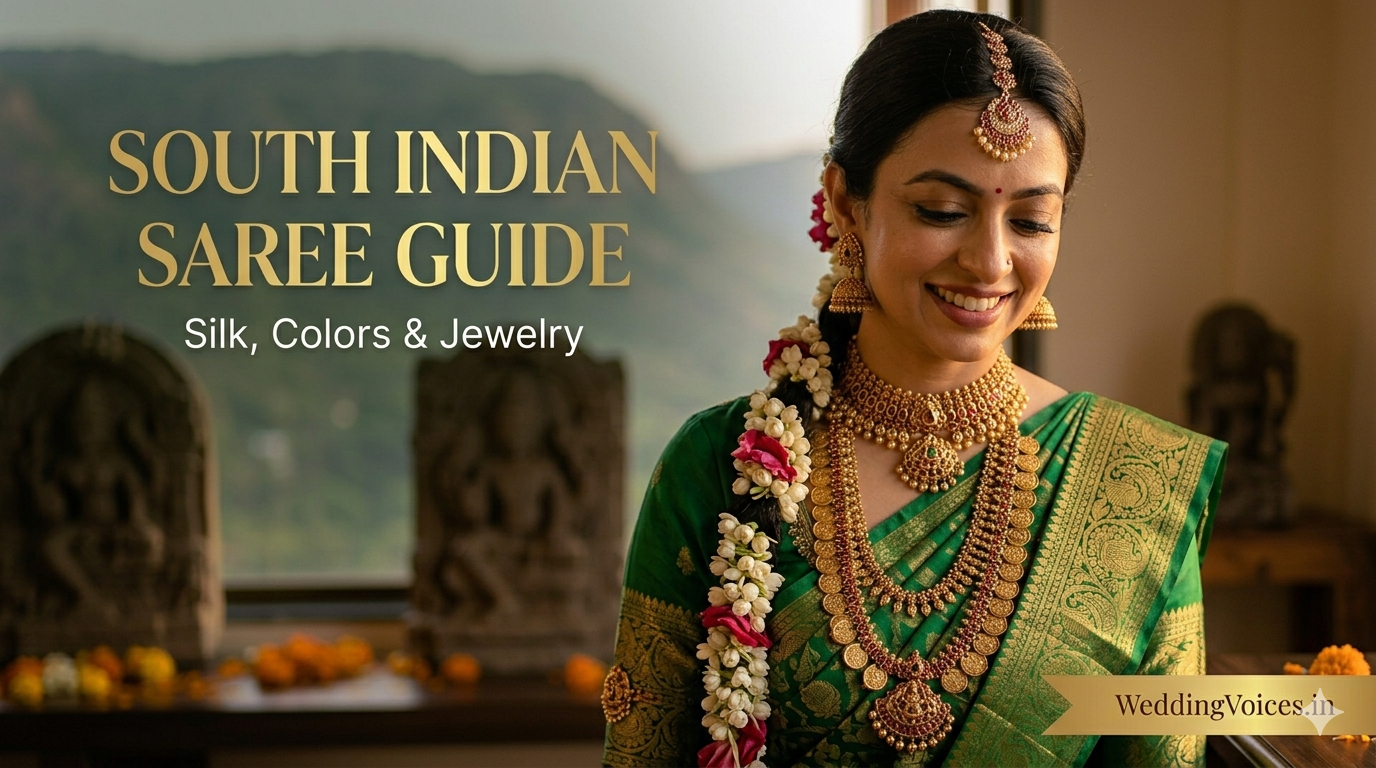
There is a distinct, breathtaking magic to a South Indian bridal saree. When a bride walks toward the mandap, accompanied by the traditional beats of the Nadaswaram, she is not just wearing a garment; she is draped in centuries of artistry, heritage, and devotion. The traditional wedding attire of South India is an exquisite symphony of rich textures, divine motifs, and glittering ornaments that transform a woman into a vision of a goddess on her wedding day.
Whether you are planning a grand temple wedding or an intimate luxury resort celebration, curating this iconic look requires an understanding of the fabrics, the hues, and the intricate adornments that complete it. This comprehensive guide will take you deep into the world of traditional silk saree weaves, the symbolism of auspicious colors, and the majestic allure of South Indian bridal jewelry to help you master your bridal look styling.
Part 1: The Fabric of Dreams – Understanding Silk Types
The foundation of the South Indian bridal aesthetic is, without a doubt, silk. In South Indian culture, silk is considered pure and auspicious, making it the only acceptable fabric for sacred rituals. However, not all silks are created equal. Understanding the different silk types is the first step in your bridal shopping journey.
The Undisputed Queen: Kanchipuram Silk
When you envision a South Indian bridal saree, you are almost certainly picturing a Kanchipuram silk (often called Kanjeevaram). Originating from the temple town of Kanchipuram in Tamil Nadu, this weave is the gold standard of bridal luxury.
What makes Kanchipuram silk so spectacular?
-
The Weight and Drape: These sarees are woven from pure mulberry silk threads of exceptional thickness, resulting in a heavy, structured drape that holds perfectly throughout hours of rituals.
-
The Korvai Technique: Authentic Kanjeevarams are woven using the ancient Korvai technique, where the body of the saree and the border are woven separately and interlocked seamlessly. This allows for stunning, highly contrasting borders.
-
Durability: A pure Kanchipuram silk saree is an heirloom. It is designed to be passed down through generations, retaining its luster and structural integrity for decades.
Other Magnificent Traditional Silk Sarees
While Kanchipuram reigns supreme, other regional weaves offer spectacular alternatives for various wedding events like the reception or the engagement:
-
Dharmavaram Silk: Hailing from Andhra Pradesh, these sarees are known for their broad, solid-colored borders and intricate brocade work. They are slightly lighter than Kanjeevarams but equally majestic.
-
Mysore Silk: Famous for its incredibly soft texture and minimalist appeal, Mysore silk is lighter and relies on the sheer quality of the silk and delicate gold borders rather than heavy motifs. It is perfect for pre-wedding functions like the Haldi or Mehendi.
-
Gadwal Silk: These unique sarees feature a cotton body with a pure silk border and pallu, making them an incredibly comfortable yet traditional option for long daytime rituals in warmer weather.
Part 2: A Palette of Tradition – Bridal Saree Colors
The color of a South Indian bridal saree is never an accident. Every hue carries a profound cultural significance, deeply rooted in Hindu mythology and regional customs.
The Auspicious Red and Maroon Sarees
Across India, red is the color of the bride, representing fertility, prosperity, and the life-giving power of the goddess. In South India, deeply saturated red and maroon sarees are incredibly popular for the main Muhurtham (the exact auspicious time the vows are taken). A rich maroon Kanjeevaram creates a striking contrast against traditional gold jewelry, projecting an aura of divine femininity.
The Brilliance of Golden Zari Work
What truly elevates these bridal saree colors is the incorporation of golden zari work. Zari is the art of weaving fine metallic threads (traditionally pure silver coated in actual gold) into the silk.
-
Motifs: The zari is used to weave auspicious symbols into the saree, such as the Yali (a mythical creature), peacocks, lotuses, mangoes (paisley), and temple borders (temple reku).
-
The Gold Tissue Saree: For brides who want to maximize their glow, a “Tissue” Kanjeevaram is woven with so much golden zari that the silk itself appears to be made of liquid gold.
The Allure of Jewel Tones
While red and gold are traditional, modern South Indian brides are enthusiastically embracing deep, rich jewel tones for their wedding wardrobes.
-
Emerald Green: Symbolizing new beginnings, nature, and harvest, a dark green bridal saree with a contrasting pink or red border is a beloved classic.
-
Royal Blue and Sapphire: These regal colors offer a stunning, modern twist and look magnificent under the bright lights of evening receptions.
-
Deep Mustard and Yellow: Yellow is highly auspicious, representing sanctity and the glow of turmeric. Many traditional sub-cultures specifically require the bride to wear a yellow silk saree during the tying of the Mangalsutra (Thali).
Part 3: Adorning the Goddess – South Indian Bridal Jewelry
A traditional silk saree is incomplete without the heavy, layered brilliance of South Indian bridal jewelry. This is not merely accessorizing; it is a vital part of the ritual. The cultural significance of adorning the bride in pure gold is tied to invoking the blessings of Goddess Lakshmi, ensuring wealth and prosperity for the new household.
The Legacy of Gold Jewelry
In South Indian traditions, gold jewelry is the ultimate status symbol and a form of financial security. However, for the wedding day, the design aesthetics lean heavily into the antique and the divine.
The Divine Touch of Temple Jewelry
The most iconic element of the South Indian bridal look is temple jewelry. Originating during the Chola and Pandya dynasties in the 9th century, this jewelry was initially crafted to adorn the deities in grand temples before being adopted by royalty and temple dancers (Devadasis).
-
Characteristics: Temple jewelry is typically crafted from pure gold and heavily features Kemp stones (uncut cabochon rubies and emeralds) and pearls.
-
Motifs: The pieces often feature detailed, miniature carvings of deities like Lakshmi, Ganesha, and Krishna, as well as swans and lotus flowers.
Necklaces and Chokers: The Art of Layering
A South Indian bride rarely wears just one necklace. The art lies in layering multiple necklaces and chokers of varying lengths.
-
The Choker (Addigai): Sitting tight against the neck, this is often a heavy Kemp stone piece.
-
The Mid-Length Chain: This could be a Mango Mala (a necklace featuring mango-shaped motifs) or a Kasu Mala (a chain made of overlapping gold coins stamped with Goddess Lakshmi).
-
The Long Haram: The longest layer, often falling below the chest, anchoring the entire jewelry look.
Earrings and Jhumkas
To balance the heavy necklaces, the bride’s ears are adorned with elaborate earrings and jhumkas. Traditional South Indian jhumkas are bell-shaped and can be quite heavy. To support the weight and add elegance, brides wear Maatals—delicate gold chains attached to the earrings that pin back into the hair.
Maang Tikka and Headpieces
The bridal hairstyle is a canvas for spectacular ornaments. The maang tikka and headpieces transform the face and complete the regal look.
-
Nethi Chutti: The traditional South Indian maang tikka that rests on the center parting of the forehead.
-
Surya and Chandra Prabha: Circular gold ornaments shaped like the sun and the moon, pinned on either side of the hair parting.
-
Jadanagam (Hair Serpent): An intricate, articulated piece of temple jewelry that is tied along the length of the bride’s long, floral-braided hair.
Bangles and Bracelets
The bride’s hands are a focal point during the rituals. Bangles and bracelets are stacked generously.
-
Valayal: The wrists are stacked with a mix of heavy gold bangles, antique kadas, and occasionally, auspicious glass bangles in red or green.
-
Vanki (Armband): A uniquely shaped, inverted V-design armband worn on the upper arm, crafted to grip the arm without restricting movement.
Part 4: Expert Bridal Look Styling
Achieving the perfect South Indian bridal look requires a delicate balance. You are working with a heavy traditional silk saree and equally heavy gold jewelry. If not styled correctly, the bride can look overwhelmed by her own attire. Here are expert tips for flawless bridal look styling.
1. The Art of Draping
A Kanchipuram silk saree is stiff and heavy. To achieve a flattering silhouette, the saree must be pre-pleated and ironed before the wedding day. The front pleats must fall perfectly straight, and the pallu should be pinned securely to the shoulder. Ensuring a crisp, neat drape prevents the heavy silk from adding unnecessary bulk to the waistline.
2. Balancing the Colors
If you choose a saree with an incredibly heavy, intricate golden zari work body, opt for an antique polish on your temple jewelry rather than bright yellow gold. The slightly oxidized, matte finish of antique Kemp jewelry beautifully complements a shiny zari saree without clashing. Conversely, if your saree is a solid jewel tone with minimal zari, you can go all-out with bright, highly polished gold.
3. Hair and Makeup Harmony
Because the attire and jewelry are deeply traditional and ornate, modern bridal look styling often leans toward balancing this with fresh, radiant makeup. Opt for a glowing, skin-like finish, a defined bindi, and beautifully kohled eyes. For the hair, the traditional long braid (Poola Jada) adorned with fresh jasmine and rose petals is non-negotiable for the Muhurtham. The fragrance of the jasmine combined with the visual of the Kanchipuram silk creates the quintessential South Indian bridal sensory experience.
Frequently Asked Questions (FAQs)
Q: How do I identify a pure Kanchipuram silk saree?
A: Look for the Silk Mark tag, a certification by the Silk Board of India. Additionally, you can check the “Korvai” joint; in a genuine, hand-woven Kanjeevaram, the border and the body are woven separately and joined, meaning the interlocking zigzag line at the border edge should feel slightly uneven to the touch.
Q: Can I wear temple jewelry with other silk types besides Kanjeevaram?
A: Absolutely. While traditionally paired with Kanchipuram silk, temple jewelry looks magnificent with Dharmavaram, Mysore silk, and even rich Banarasi silks. The heavy gold and Kemp stones complement any pure, heavy silk fabric.
Q: Are red and maroon sarees mandatory for South Indian brides?
A: No. While highly traditional and popular, many South Indian communities prefer different colors. For example, Telugu brides often wear white or cream silk sarees with red borders (Madhuparkam) for specific rituals, while some communities favor yellow or green.
Q: How do I manage the weight of South Indian bridal jewelry?
A: Layering is key. Ensure your heaviest pieces (like the long Haram) are resting on your chest rather than pulling tightly on your neck. For earrings and jhumkas, always use a Maatal (ear chain) pinned into your hair to distribute the weight and save your earlobes from stretching during the long ceremony.
60+ tasks from engagement to vidaai, grouped by month. Tick them off — your progress is saved on this device.

Written by
Thalla Lokesh
Part of the Wedding Voices editorial team, writing about real weddings, planning and ideas for couples.