

Wedding Budget Spreadsheet: How to Track Every Rupee

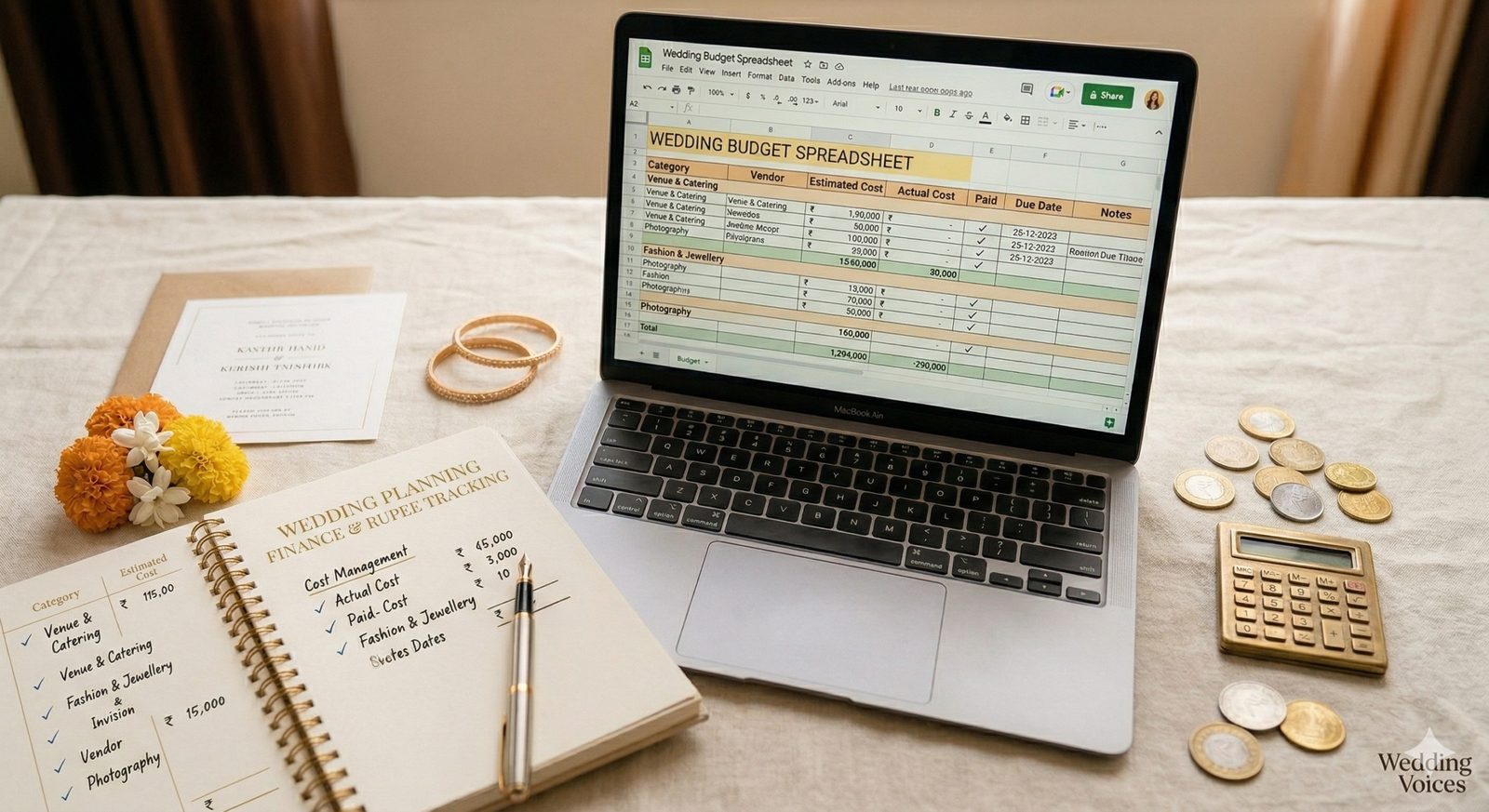
Planning an Indian wedding is a beautiful, emotional journey, but it is also a massive financial undertaking. Between booking grand venues, securing top-tier photographers, and finalizing elaborate bridal trousseaus, wedding expenses can quickly snowball.
The secret to a stress-free celebration isn’t necessarily having a bottomless bank account—it is mastering your wedding planning finance. Without meticulous money management, you risk post-wedding financial stress. The ultimate tool to prevent this? A comprehensive wedding budget spreadsheet. Here is your expert guide to rupee tracking and taking complete control of your big day.
The Power of Spreadsheets for Budgeting
When dealing with the complexities of an Indian wedding, mental math or scribbled notes simply won’t cut it. Spreadsheets for budgeting are non-negotiable.
A well-structured budget spreadsheet acts as your financial command center. It transitions your broad financial planning goals into actionable data. By keeping all your numbers in one centralized digital document (like Google Sheets or Microsoft Excel), you gain a real-time budget overview. You will know instantly whether you have the remaining funds to upgrade your floral decor or if you need to implement strict cost control for the remaining pre-wedding events.
Establishing Your Budget Categories
The first step in effective expense tracking is organization. You cannot track what you haven’t categorized. Before entering a single number, divide your total wedding budget into logical, distinct expense categories.
Here are the essential budget categories every couple should include:
-
Venue & Logistics: Mandap rentals, hotel bookings, transportation, and generator rentals.
-
Catering & Hospitality: Per-plate costs, live counters, dessert stations, and welcome drinks.
-
Fashion & Jewelry: Bridal lehengas, groom’s attire, family clothing, and precious or semi-precious jewelry.
-
Media & Entertainment: Photography, videography, DJs, traditional musicians, and sound systems.
-
Decor & Production: Floral arrangements, lighting, stage design, and furniture rentals.
-
The Contingency Fund: A crucial 10–15% buffer for unexpected costs.
The Mechanics of Rupee Tracking
Setting your target numbers is only the first phase; the real discipline lies in cost management throughout the planning months.
1. Estimated vs. Actual Costs
Your spreadsheet should always have two primary columns side-by-side: “Estimated Cost” and “Actual Cost.” When you begin, fill out the estimated column based on your initial research. As you sign contracts, update the actual column. This side-by-side comparison is the foundation of proactive money management, showing you instantly if a specific category is running over budget.
2. Tracking Payments and Due Dates
Indian wedding vendors often require payments in installments—an initial advance, a midway payment, and a final settlement on the wedding day. Your spreadsheet must include columns dedicated to tracking payments. Log every single transaction, note the date it was paid, and highlight upcoming due dates so you never miss a deadline or accidentally double-pay a vendor.
3. Log Every Single Transaction
True rupee tracking means no expense is too small to record. Did you buy a set of bindis for the Haldi ceremony? Log it. Did you pay a small delivery fee for your wedding invitations? Log it. These minor “hidden costs” are exactly what cause couples to blow past their budget. Consistent expense tracking keeps you accountable.
Maintaining Cost Control and Adjusting on the Fly
A wedding budget is a living document. It will fluctuate. The true value of a spreadsheet is that it allows you to pivot when necessary.
If you fall in love with a bridal designer and overspend in your “Fashion” category, your budget overview will immediately show that you are in the red. To maintain overall cost control, you must then look at your other expense categories and decide where to make a cut. Perhaps you reduce the complexity of your Sangeet decor or opt for digital invitations instead of physical ones to balance the scales.
By treating your wedding like a beautifully executed project and utilizing a wedding budget spreadsheet, you ensure that your focus remains on celebrating your love, rather than stressing over the final bill.
Split your total budget across venue, catering, décor, photography and more — with editable percentages and a live chart.

Written by
Thalla Lokesh
Part of the Wedding Voices editorial team, writing about real weddings, planning and ideas for couples.